The full curriculum, subject by subject
What is covered in every subject from Playway to Class 8, and what a child should be able to do at the end of each year.
View curriculumFour stages, one continuous plan. Here is what a child studies at each point of the journey from Playway to Class 8.
The first year is about school itself — being away from home for a few hours, sitting with other children, and discovering that this place is safe and interesting.
Entirely through play. Blocks, puzzles, sorting toys, floor games, songs and picture books — the child experiences the concept before it is ever named. There is no formal writing and no examination at this stage.
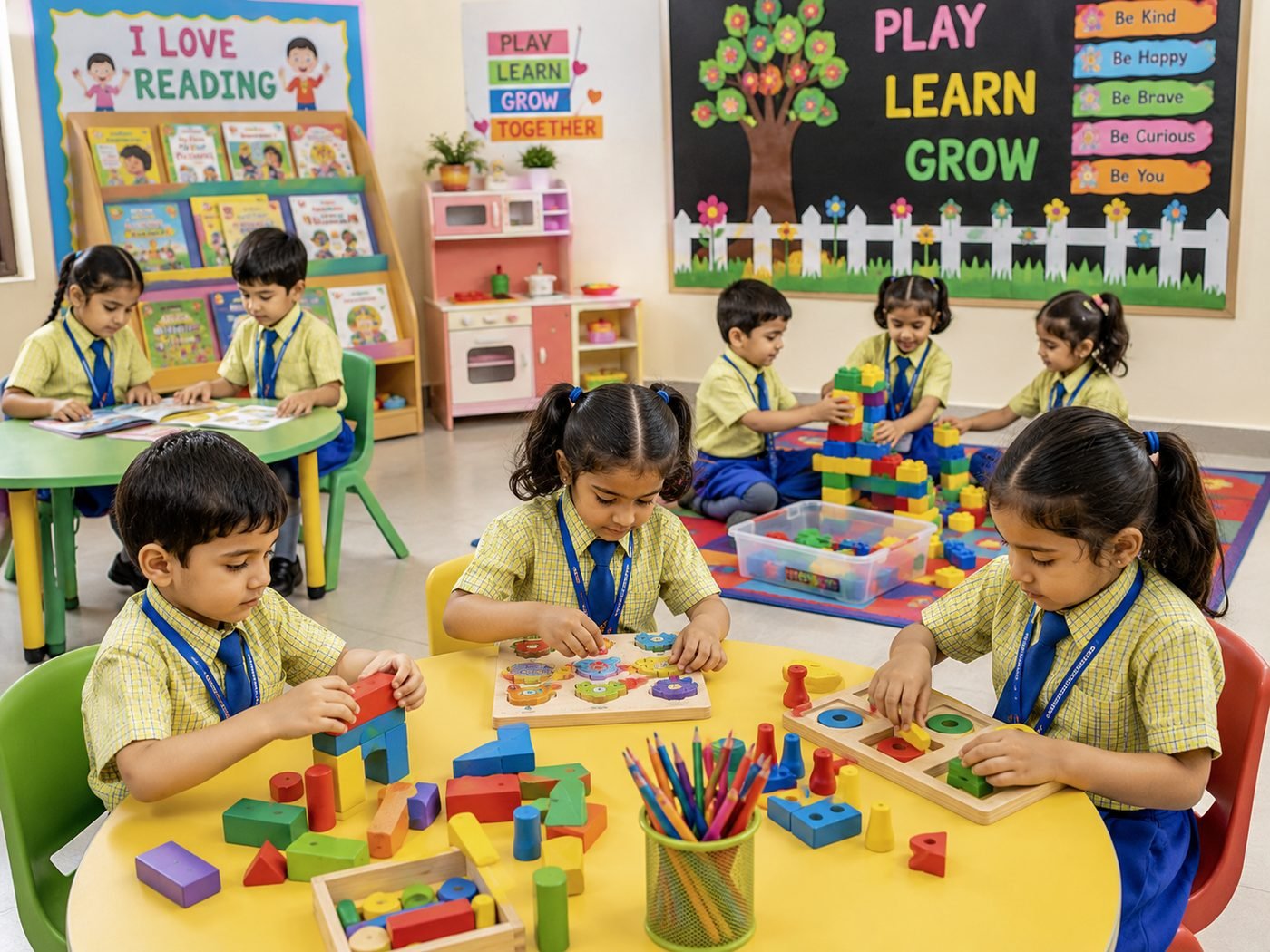
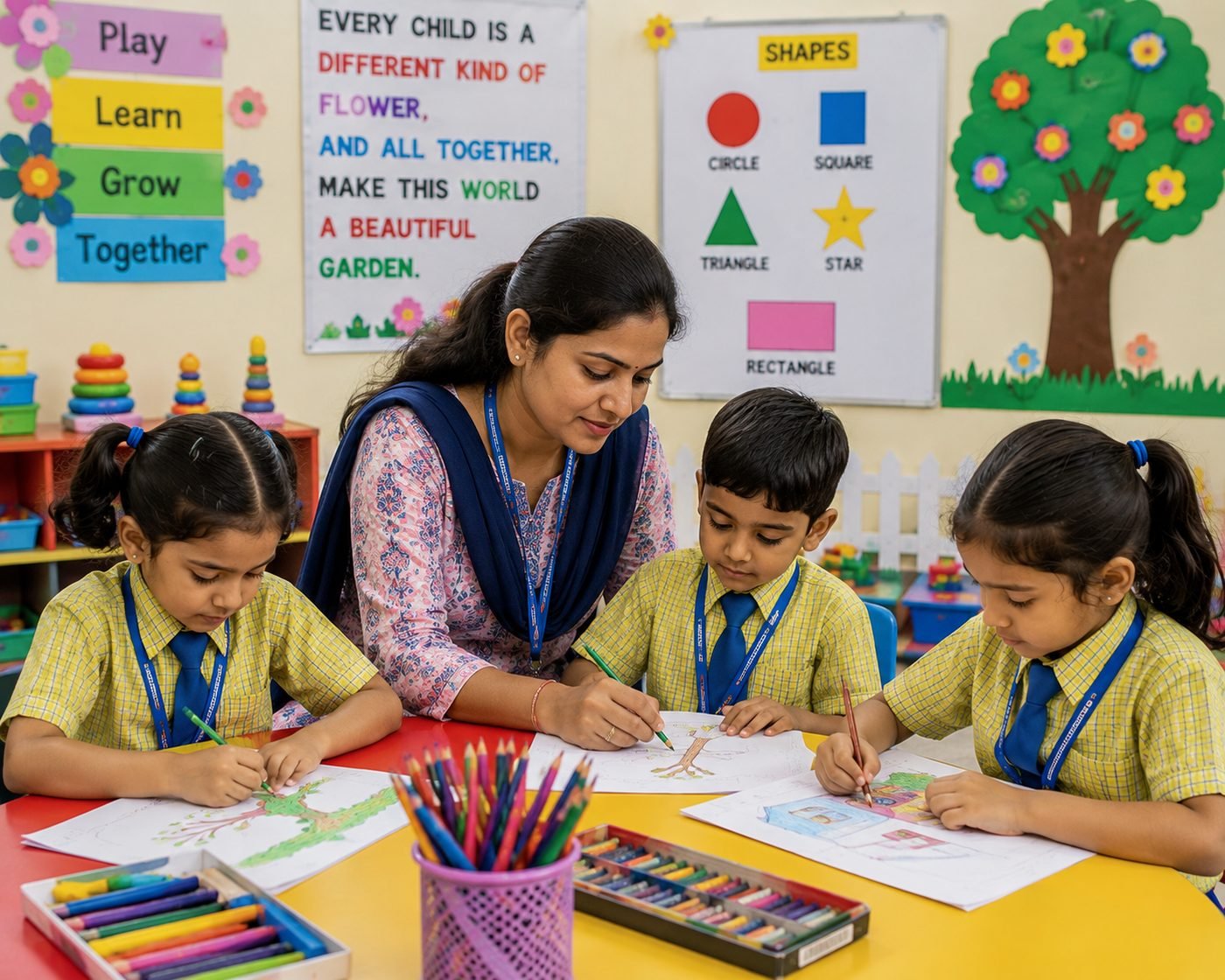
Three years in which play slowly makes room for structure. By the end of UKG a child should be reading simple words, writing neatly on a line, and comfortable with numbers to a hundred.
| Class | Language | Numbers |
|---|---|---|
| Nursery | Capital letters, sounds, picture reading | Counting 1–20, shapes, sorting |
| LKG | Small letters, three-letter words, Hindi swar | Numbers 1–50, more and less, patterns |
| UKG | Simple sentences, sight words, Hindi vyanjan | Numbers 1–100, addition and subtraction |
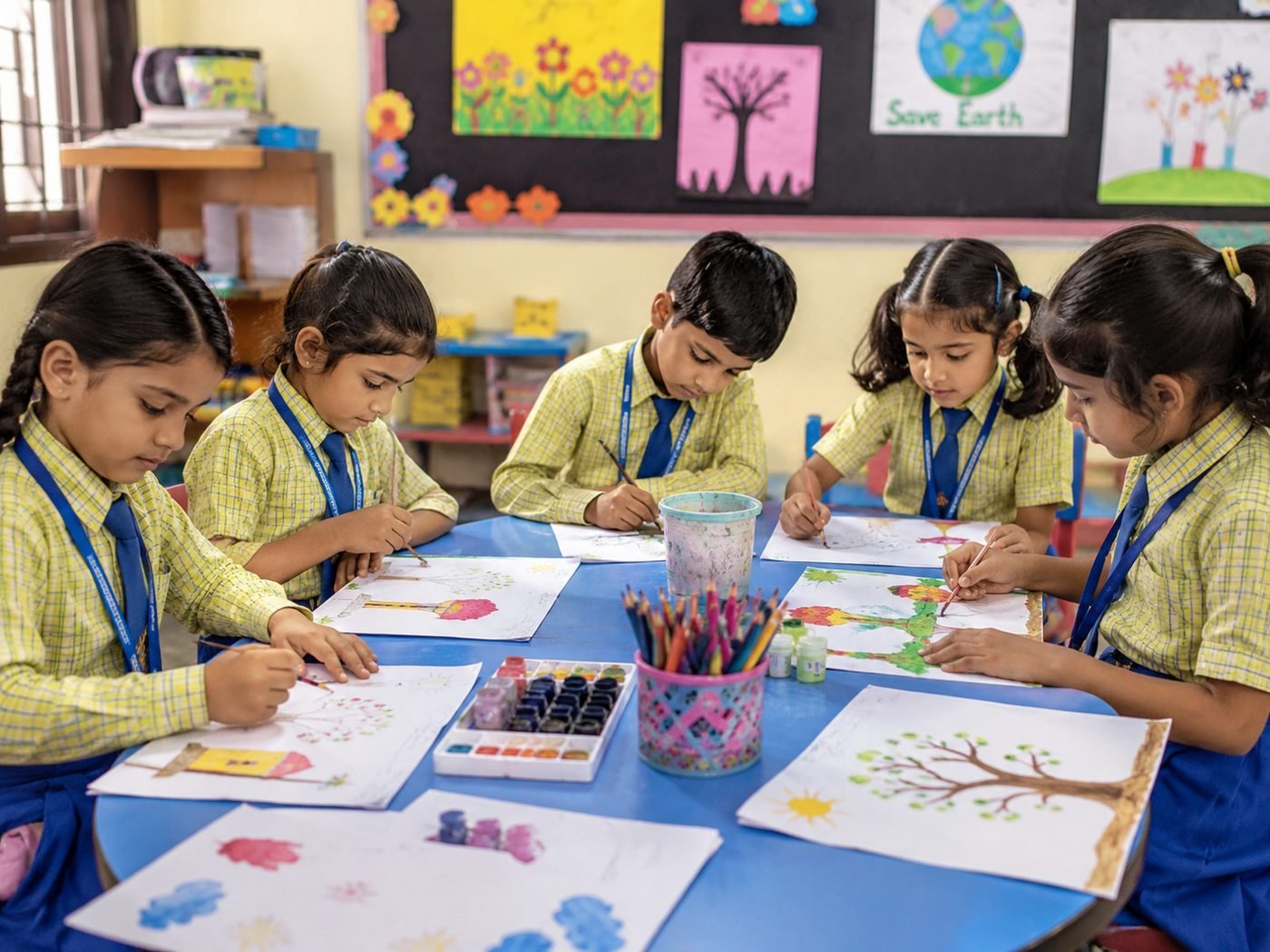
This is where study habits are formed. Reading becomes fluent, written work becomes daily, and the first proper examinations arrive.
Regular class tests, written assignments and periodic examinations, with marks discussed at Parent–Teacher Meetings. The point of a test here is to locate a gap, not only to produce a rank.

The final three years with us. Subject teachers take over, papers get longer, and students are expected to plan their own revision.
Written examinations in the format they will meet later, project work and presentations, and a steady push towards independent study — so a student can move to any Class 9 without a difficult first term.
What is covered in every subject from Playway to Class 8, and what a child should be able to do at the end of each year.
View curriculumThe activity-based method behind every period — Learn, Explore, Create, Grow — and how individual attention actually works in a classroom.
Teaching methodologyTell us the age and the class you are considering, and we will confirm availability, the fee for that class, and what the admission needs.